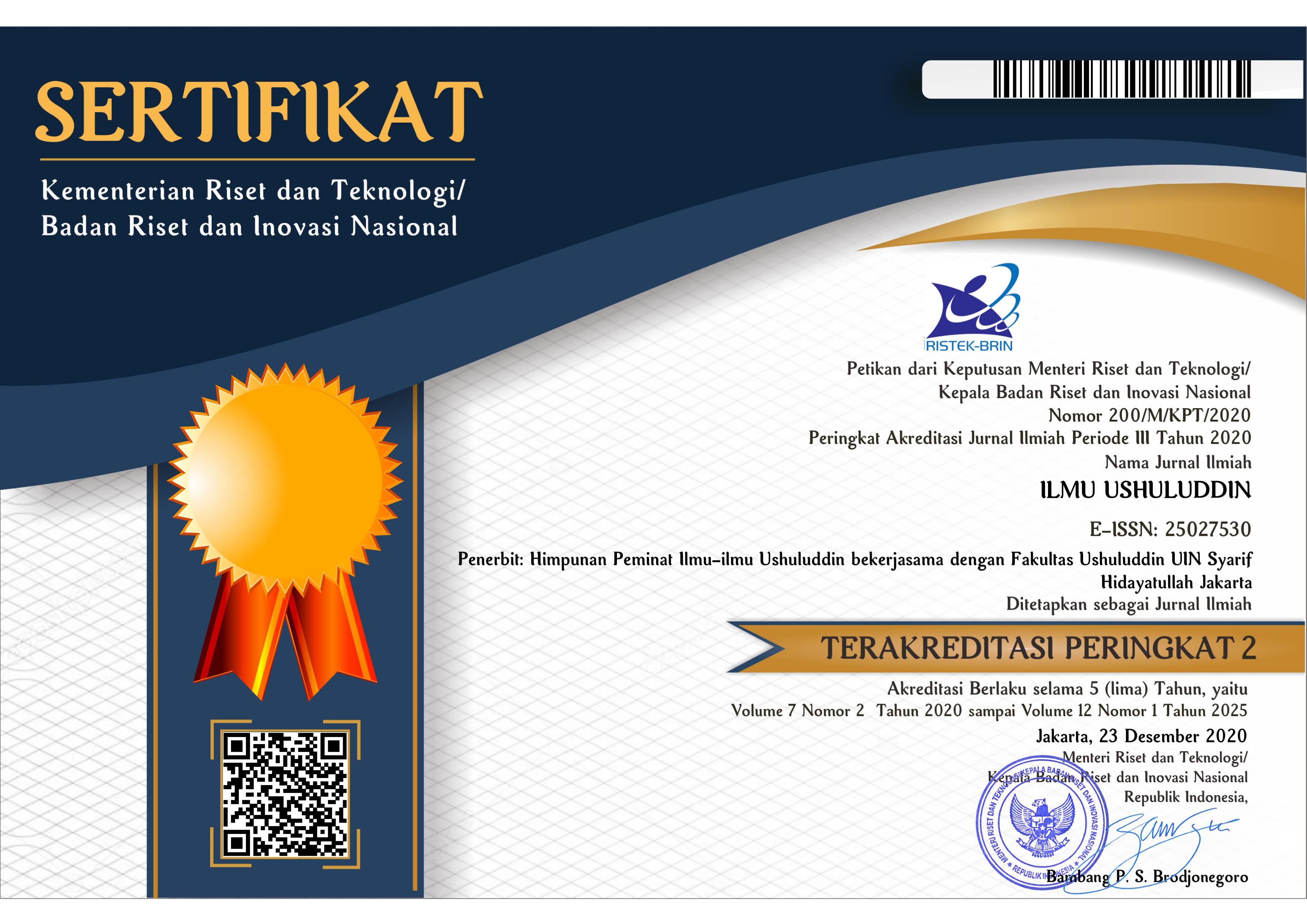
| ACCREDITATION CERTIFICATE |
Certificate 2020-2025
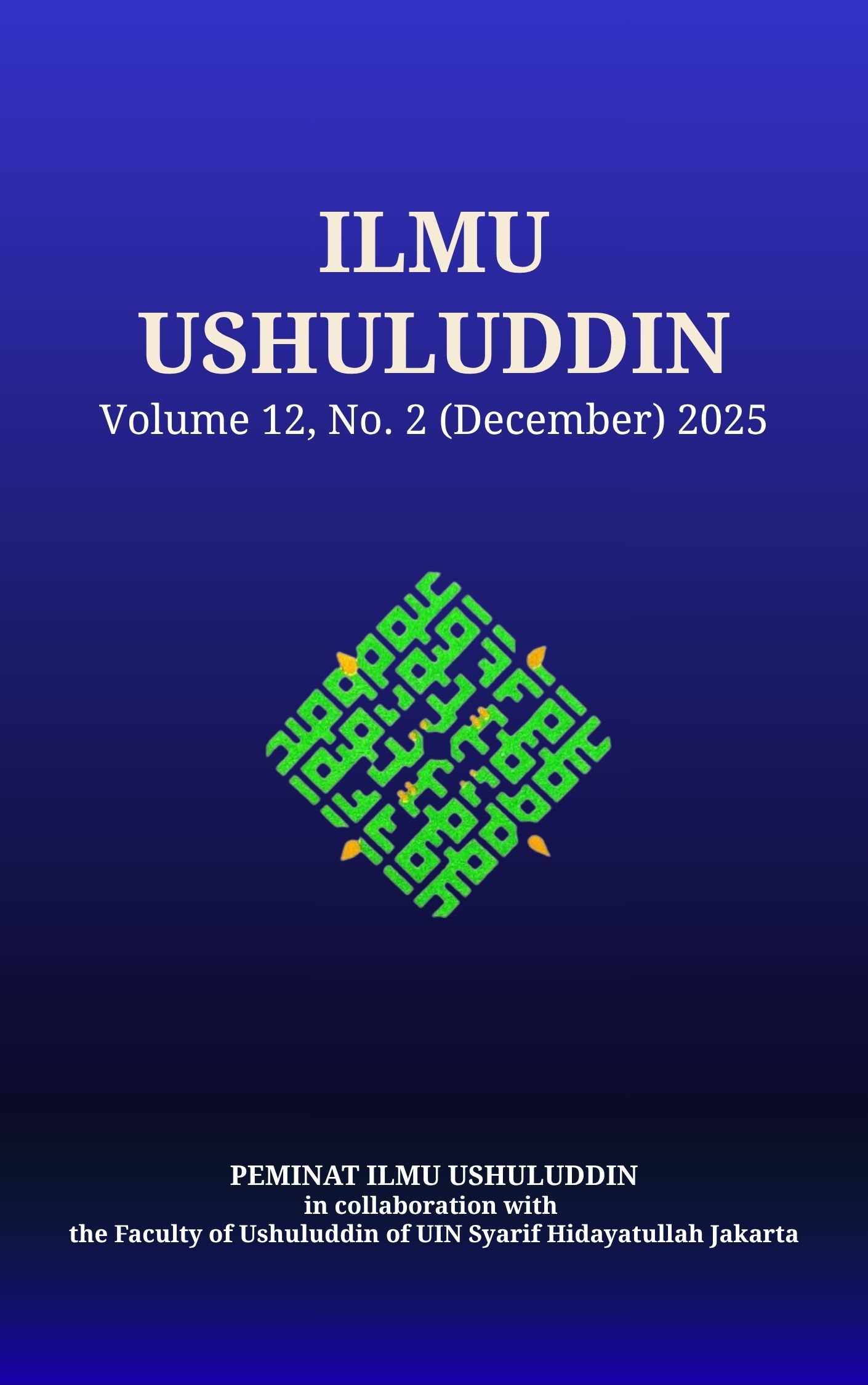
This issue presents a dynamic landscape of contemporary Islamic thought, situated at the intersection of the reconstruction of authority, the negotiation of identity, and epistemological transformation amid social and technological change. Through a reexamination of nationalism within Ahmad Hassan’s Qur’anic exegesis, the responses of Muslim youth to formal religious authority, and the operationalization of Gus Dur’s ethical pluralism in interfaith civic praxis, the issue underscores the ongoing reinterpretation of Islam in dialogue with nationhood and pluralism. At the same time, the shift from sanad to algorithm reveals a redefinition of authority and participation in digital spaces, while the engagement between Ibn Taymiyyah’s epistemology and Wittgensteinian fideism offers a profound critique of theological foundationalism and emphasizes lived religious practice. Taken together, these five articles weave a coherent narrative of transition—from fixed to negotiated authority, from normative doctrine to dialogical praxis, and from closed tradition to interpretive openness within contemporary Islam.
 Abstract View: 138
 pdf Download: 106
Abstract View: 94
pdf Download: 51
Abstract View: 97
pdf Download: 28
Abstract View: 59
pdf Download: 17
Abstract View: 26
pdf Download: 21
pdf Download: 106
Abstract View: 94
pdf Download: 51
Abstract View: 97
pdf Download: 28
Abstract View: 59
pdf Download: 17
Abstract View: 26
pdf Download: 21 | ACCREDITATION CERTIFICATE |
Certificate 2020-2025
| INDEXED BY |


