ORBIT: Journal of University Student and Career DevelopmentA scholarly journal on student career guidance, employability, work readiness, and graduate transition. Student Career Development Employability Graduate Transition
|
 |
About the Journal
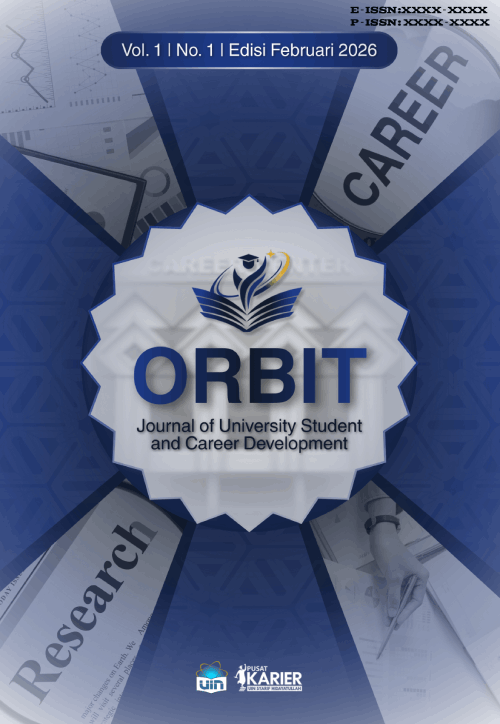
ORBIT: Journal of University Student and Career Development is a scholarly journal published by the Career Center of UIN Syarif Hidayatullah Jakarta. The journal serves as an academic platform for developing ideas, research, and best practices in student career guidance, employability development, work readiness, and the transition of university graduates into the world of work and industry.
The term ORBIT represents the dynamic, directed, and continuous trajectory of students’ career development, beginning from their academic journey in higher education and extending toward their integration into the professional world. From this perspective, ORBIT views career not merely as an end result, but as an ongoing developmental process shaped by competence, experience, readiness, and personal growth.
ORBIT was established in response to the growing gap between higher education and labour market needs, both at national and global levels. The journal encourages the integration of theoretical studies, empirical research, and career guidance practices that are relevant to the needs of university students and graduates.
In addition, ORBIT provides space for survey-based research and empirical analysis involving UIN students, particularly in relation to career planning, work readiness, internship experience, academic and non-academic competencies, and students’ perceptions of the world of work and industry.
Focus and Scope
ORBIT is a multidisciplinary scholarly journal focusing on university student career guidance and graduate transition to the world of work and industry. The journal examines student career development as a continuous process involving various disciplines, including:
- Education and Counselling: student career guidance, academic counselling, career planning, and career development.
- Psychology: career psychology, interests and talents, work readiness, work adaptation, and graduate well-being.
- Social and Policy Studies: higher education policy, employment issues, and youth transition to the labour market.
- Economics and Business: graduate labour market, employability, student entrepreneurship, and industry needs.
- Human Resource Management: competency development, young talent management, and university-industry relations.
- Sociology and Humanities: graduate social mobility, inequality of access to employment, and the social dynamics of work.
- Science and Technology: digital transformation, automation, and their impact on graduate careers and employment.
- Islamic Studies and Ethical Values: work ethics, Islamic values in career planning, and graduate professionalism.
The journal welcomes manuscripts on, but not limited to, the following topics:
- Career guidance and counselling for university students;
- Academic-based career planning and development;
- Student and graduate work readiness or employability skills;
- The role and practices of university career centres;
- Graduate transition to the world of work and industry;
- University-industry relations, internship experience, and labour market needs;
- Survey-based, interview-based, and tracer study research on students and graduates;
- Curriculum dynamics and employment policies related to graduate career outcomes.
Journal Objectives
ORBIT aims to:
- Disseminate scholarly works in the field of student career guidance and graduate transition to the world of work.
- Encourage empirical research based on the real needs of university students and graduates.
- Strengthen the role of university career centres as a bridge between academia and the labour market.
- Provide academic references for policymakers, career practitioners, and higher education institutions.
- Support the improvement of work readiness and competitiveness of university graduates at national and international levels.
ORBIT connects academic research, empirical data, and career development practices to strengthen the relevance of higher education to the changing needs of work, industry, and professional society.
